The short answer
Give them a ready made conference justification kit: a letter template, a cost calculator, a short list of outcomes for their employer, and a plan for reporting back. Most associations treat this as an afterthought. It should be one of the first things you build. The reason is simple. The biggest barrier is often not interest. In a survey of about 750 association and event professionals reported by Associations Now, 55% named employer budget approval as a reason people stayed away. That sits just behind workload at 56% and ahead of the cost of attendance itself at 49%.
Why do people need to justify conference attendance?
Because most professionals at a conference are spending someone else’s money and someone else’s time. Registration, flights, hotel and days away from the clinic or office add up, and a manager has to weigh that against everything else in the budget.
“Is attending conferences worth it?” and “Why is attending conferences so expensive?” are among the questions people ask most around this topic. Your future attendee is asking them too, usually on behalf of a boss who will ask them out loud. When the attendee can’t answer quickly, the request stalls. Nobody says no. The registration just never happens.
What is a conference justification letter?
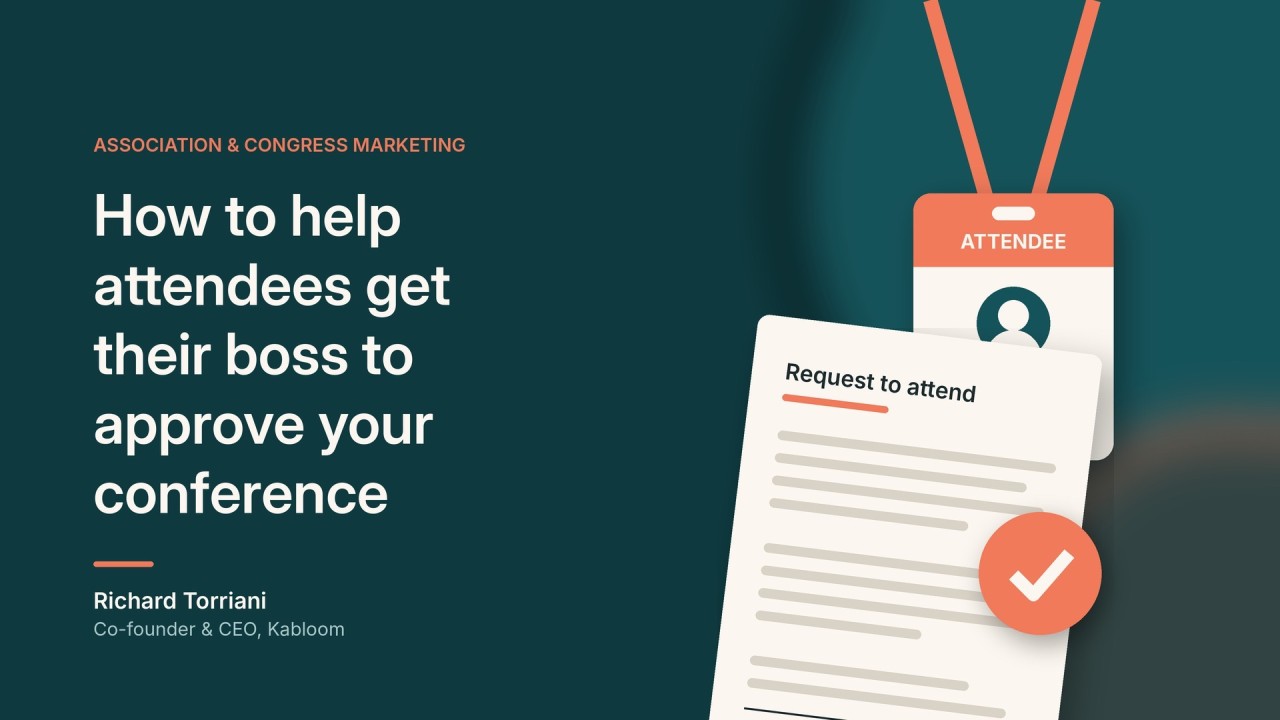
A conference justification letter is a short, formal request an employee sends to a manager asking for approval and funding to attend a specific event. A good one names the event and dates, sets out the full cost, lists three or four concrete benefits for the organization, and explains how the employee will share what they learn.
People search for this directly, with phrases like “justification letter for conference attendance”, “how to justify conference attendance” and “conference justification letter template”. Some even search for the letter of one specific event by name, as they do for the Esri User Conference. They also ask AI assistants how to write one. That is a good reason to publish your own official version, where both search engines and AI tools can find it.
What should a conference justification toolkit include?
The strongest examples in the association world follow a similar pattern. The ISPE Annual Meeting “Build Your Case” page and the APhA2026 justification toolkit both offer:
- A ready to edit letter or email template the attendee personalizes for their manager.
- A sample budget, so the full cost of registration, travel, hotel and meals is on one page before the manager asks.
- Benefit talking points grouped around education, networking, industry insights and innovation.
- Checklists for before and after the meeting, including how the attendee will share what they learned.
APhA puts a hard number front and center: 20.5 CE credits in four days. The American College Health Association adds a smart touch by offering two versions of its justification letter, one for member schools and one for nonmembers. AIChE publishes a similar kit for its annual meeting.
How do you make the business case for attending a conference?
Write the benefits in the manager’s language, not the attendee’s. “I’ll learn a lot” does not get approved. These do:
- Continuing education credits the person needs anyway, earned in one trip instead of several.
- Specific sessions tied to a current project, a new guideline or a regulation the team must follow.
- Named vendors or experts they can meet in person, saving separate trips or calls.
- A written summary or a lunch and learn for colleagues who stayed behind, so the whole team benefits.
For medical and scientific congresses, accredited CME credits are often the single strongest line in the letter. Put the number of credits available right into your template.
How can attendees go to a conference for less?
“How to go to a conference for free?” and “how to pay for conference attendance” come up again and again, along with searches for conference attendance grants and funding. Answer these questions on your own website before people go looking elsewhere:
- Early registration rates with a clear deadline the attendee can quote.
- Group rates for teams, so one approval covers three people.
- Travel grants, scholarships or reduced fees for students, early career members and members from lower resource settings.
- Volunteer or speaker roles that waive or reduce registration.
Each of these turns a hard budget conversation into an easy one.
Where should the toolkit live, and when should you promote it?
Give it its own page with a plain, searchable title like “Justify your attendance” or “Convince your boss”. Link to it from the registration page, every registration email and your member newsletter. Promote it hardest when budgets are being set, which for many US organizations means the fall before a spring meeting, and again ahead of your early registration deadline.
Then make it easy to share. An editable Word letter and a one page PDF summary travel well in a forwarded email,and that forwarded email is exactly where the decision gets made.
The takeaway for association marketers
Your marketing doesn’t end when someone decides they want to come. For a large share of your audience, that is when the real sale starts, and it happens in a conversation you never see. Give your future attendees the words, the numbers and the follow up plan they need to walk into that conversation ready. A good justification kit costs little to build and keeps working year after year.
What does your association offer attendees who need approval to attend? I’d love to hear what has worked for you.
This article first appeared in my LinkedIn newsletter, Association Growth Strategy.